
Sunday 26th September 1937
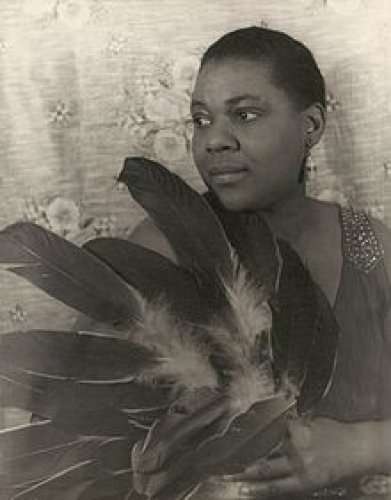
US blues singer Bessie Smith (43) was critically injured while travelling along US Route 61 in Mississippi in an old Packard. Her lover, Richard Morgan, was driving and misjudged the speed of a slow-moving truck ahead of him. Tire marks at the scene suggested that Morgan tried to avoid the truck by driving around its left side, but he hit the rear of the truck side-on at high speed. The tailgate of the truck sheared off the wooden roof of Smith’s old Packard. Smith, who was in the passenger seat, probably with her right arm or elbow out the window, took the full brunt of the impact. Morgan escaped without injuries. The first people on the scene were a Memphis surgeon, Dr. Hugh Smith (no relation), and his fishing partner, Henry Broughton. In the early 1970s, Hugh Smith gave a detailed account of his experience to Bessie’s biographer Chris Albertson. This is the most reliable eyewitness testimony about the events surrounding her death. After stopping at the accident scene, Hugh Smith examined the singer, who was lying in the middle of the road with obviously severe injuries. He estimated she had lost about a half pint of blood and immediately noted a major traumatic injury to her right arm; it had been almost completely severed at the elbow. He stated that this injury alone did not cause her death. Although the light was poor, he observed only minor head injuries. He attributed her death to extensive and severe crush injuries to the entire right side of her body, consistent with a sideswipe collision.Broughton and Smith moved the singer to the shoulder of the road. Smith dressed her arm injury with a clean handkerchief and asked Broughton to go to a house about 500 feet off the road to call an ambulance. By the time Broughton returned, about 25 minutes later, Bessie Smith was in shock. Time passed with no sign of the ambulance, so Hugh Smith suggested that they take her into Clarksdale in his car. He and Broughton had almost finished clearing the back seat when they heard the sound of a car approaching at high speed. Smith flashed his lights in warning, but the oncoming car failed to stop and plowed into his car at full speed. It sent his car careening into Bessie Smith’s overturned Packard, completely wrecking it. The oncoming car ricocheted off Hugh Smith’s car into the ditch on the right, barely missing Broughton and Bessie Smith.The young couple in the new car did not have life-threatening injuries. Two ambulances arrived on the scene from Clarksdale, one from the black hospital, summoned by Broughton, the other from the white hospital, acting on a report from the truck driver, who had not seen the accident victims.Bessie Smith was taken to Clarksdale’s G. T. Thomas Afro-American Hospital, where her right arm was amputated. She died that morning without regaining consciousness. After her death, an often repeated but now discredited story emerged that she had died as a result of having been refused admission to a whites-only hospital in Clarksdale. The jazz writer and producer John Hammond gave this account in an article in the November 1937 issue of Down Beat magazine. The circumstances of Smith’s death and the rumor promoted by Hammond formed the basis for Edward Albee’s 1959 one-act play The Death of Bessie Smith.”The Bessie Smith ambulance would not have gone to a white hospital, you can forget that,” Hugh Smith told Albertson. “Down in the Deep South cotton country, no ambulance driver, or white driver, would even have thought of putting a colored person off in a hospital for white folks.”
Smith’s funeral was held in Philadelphia a little over a week later, on October 4, 1937. Her body was originally laid out at Upshur’s funeral home. As word of her death spread through Philadelphia’s black community, the body had to be moved to the O.V. Catto Elks Lodge to accommodate the estimated 10,000 mourners who filed past her coffin on Sunday, October 3.Contemporary newspapers reported that her funeral was attended by about seven thousand people. Far fewer mourners attended the burial at Mount Lawn Cemetery, in nearby Sharon Hill. Gee thwarted all efforts to purchase a stone for his estranged wife, once or twice pocketing money raised for that purpose.Smith’s grave was unmarked until a tombstone was erected on August 7, 1970, paid for by the singer Janis Joplin and Juanita Green, who as a child had done housework for Smith.