


Rust is one of the most persistent enemies of a car. It can begin with something that looks little more than a blemish in the paintwork before gradually spreading beneath the surface and, in more serious cases, compromising important parts of the vehicle.
For owners of older and classic cars, keeping corrosion under control is particularly important. Original bodywork, ageing protective coatings and previous repairs can all influence how quickly rust develops. Even modern vehicles, however, are not immune.
Learning how to recognise the early warning signs and understanding how to deal with corrosion can help preserve a vehicle’s appearance, condition and structural integrity.
Why Do Cars Rust?
Rust is the result of corrosion that occurs when iron or steel reacts with oxygen and moisture. Cars are particularly exposed because their bodywork and underbody components encounter rain, road spray, mud, condensation and, during winter, salt used on roads.
Damage to paint or protective coatings can create an opening through which moisture reaches the metal beneath. Once corrosion starts, it can gradually spread if the underlying cause is not addressed.
Areas where dirt and moisture collect can be particularly vulnerable. Wheel arches, sills, floor sections, door bottoms, boot areas and components underneath the vehicle are all worth checking regularly.
Classic cars can require even closer attention because their construction, previous restoration work and age may leave certain areas more susceptible to corrosion.
Learn to Recognise the Early Signs
Rust does not always begin as obvious orange-brown corrosion. The earliest warning signs can be surprisingly subtle.
Look for:
- Small bubbles beneath the paint
- Brown or orange discolouration
- Blistered or flaking paint
- Rough patches around wheel arches
- Corrosion around seams and joints
- Small holes or perforations in metal
- Paint that appears cracked or lifted
- Rust around previously repaired areas
Bubbling paint deserves particular attention. It can indicate that corrosion has already developed underneath the painted surface rather than simply being a superficial mark.
Regular inspection makes it easier to identify these problems before they become extensive.
Pay Attention to the Underside
The underside of a car can be more difficult to inspect but should not be forgotten.
Road debris, standing water and salt can reach areas that are rarely seen during normal driving. Components around the floor, chassis, suspension mounting points and exhaust system can all experience corrosion depending on the vehicle and its environment.
When having a car serviced or inspected, it is worth asking for the underside to be checked as well. A vehicle that looks immaculate from the outside may still have developing corrosion underneath.
This is particularly relevant for older vehicles. A classic car may have received cosmetic restoration while hidden areas remain vulnerable to corrosion.
Deal With Paint Damage Promptly
A stone chip or scratch may seem insignificant, but exposed metal can become a starting point for corrosion.
Small areas of paint damage should therefore be assessed rather than ignored. Cleaning the area, preventing moisture from remaining trapped against the metal and repairing damaged protective coatings can help reduce the opportunity for rust to develop.
The appropriate repair will depend on the depth and extent of the damage. Surface marks can sometimes be dealt with relatively simply, while corrosion that has penetrated the metal requires a more comprehensive repair.
Know When Rust Has Become Structural
Not all rust is simply cosmetic.
Corrosion affecting load-bearing or structural sections of a vehicle can become a serious concern. Sills, chassis sections, mounting points and other structural components need particular attention because deterioration can affect the strength and safety of the vehicle.
If metal has become significantly weakened, perforated or distorted, painting over the affected area will not solve the underlying problem.
Professional assessment is advisable whenever corrosion appears extensive or affects an important structural component. A proper repair may involve removing deteriorated metal and restoring the affected section rather than simply treating the visible surface.
Welding Can Have an Important Role in Restoration
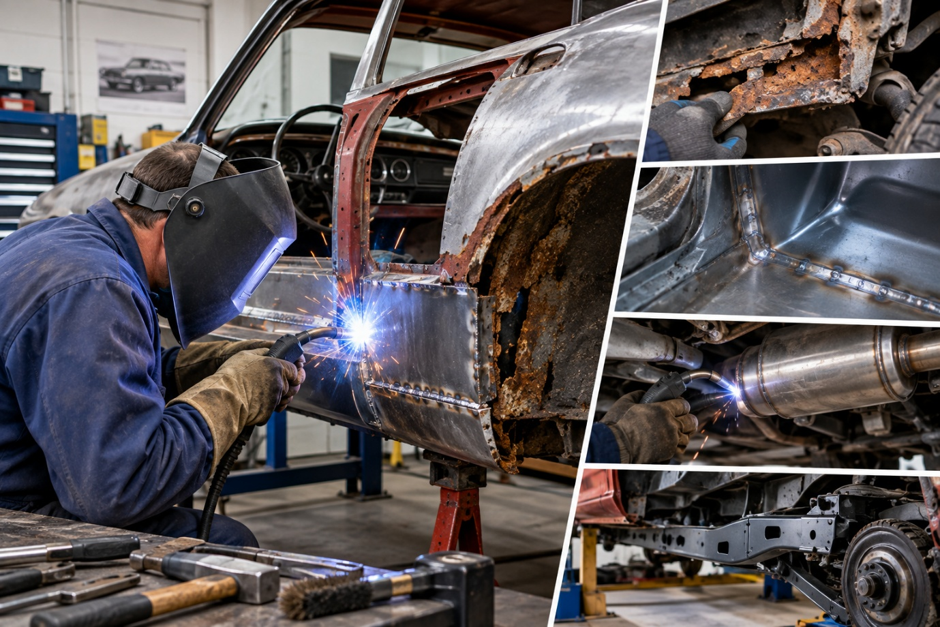
For some vehicles, particularly older cars undergoing restoration, corrosion cannot be resolved with cosmetic products alone.
Where sections of metal have deteriorated, properly carried out welding can be part of the repair process. A car welding service may be used for areas such as damaged chassis sections, bodywork, frames, exhaust components and other metal parts, depending on the vehicle and the nature of the repair.
The quality of the preparation is just as important as the welding itself. Corroded material needs to be assessed carefully, and any replacement section needs to be appropriately positioned and securely joined.
This is one reason restoration work should be approached as more than simply making a car look presentable. A successful repair should address the underlying condition of the metal.
Classic Cars Need Particular Care
Rust prevention is especially important for classic and historic vehicles.
Older cars can have considerable character and value, but their age means corrosion may have developed in several areas over decades. Previous repairs can also make it difficult to determine the original condition of the bodywork.
When restoring an older vehicle, it is useful to inspect the car systematically rather than concentrating only on the most visible areas.
Photographing areas before restoration can also provide a useful record of the vehicle’s condition. For owners carrying out extensive restoration, keeping records of replacement panels, repairs and corrosion treatment can help document the work carried out over time.
This approach is particularly valuable when preserving a vehicle for future generations rather than simply preparing it for immediate use.
Keep the Car Clean
Regular cleaning is one of the simplest ways to reduce the conditions that encourage corrosion.
Mud and road grime can retain moisture against the bodywork, while deposits containing road salt can accelerate corrosion. Washing the underside and wheel areas periodically can therefore be particularly useful during periods when roads are heavily salted.
After cleaning, allowing the vehicle to dry properly is also important. Cars stored in damp, poorly ventilated environments can remain exposed to moisture even when they are not being driven.
For classic vehicles, appropriate storage can make a substantial difference. A dry, well-ventilated garage is generally preferable to leaving a valuable older car exposed to rain and changing weather conditions.
Protect Vulnerable Areas
Different vehicles have different corrosion-prone areas, so prevention should be based on the car’s construction and condition.
Protective treatments may be appropriate for certain exposed metal surfaces and underbody areas, but preparation matters. Applying a protective coating over existing corrosion without addressing the problem underneath can simply conceal deterioration.
Drainage points should also be kept clear. Blocked drains can allow water to accumulate in areas around doors, boots, windscreens or other body sections.
Regularly checking seals, drainage channels and areas where panels meet can help identify moisture problems before they cause extensive damage.
Do Not Ignore Small Problems
One of the biggest mistakes a car owner can make is assuming that a small rust spot will remain small.
Corrosion can develop underneath paint and spread beyond what is immediately visible. By the time a large rust patch becomes obvious, the affected metal may already require considerably more work.
Regular inspections are therefore an important part of vehicle ownership. Checking the car every few months, particularly after winter, can help identify problems at an earlier stage.
For owners of classic cars, this should form part of a wider maintenance routine alongside checking fluids, tyres, brakes, suspension and other important components.
Protecting a Car for the Long Term
Rust prevention is ultimately about taking a proactive approach to vehicle care. Keeping the car clean, protecting exposed areas, repairing paint damage and inspecting the underside can all help slow the development of corrosion.
When rust has progressed into damaged or weakened metal, professional repair may be necessary. Addressing the underlying problem rather than simply disguising the visible corrosion can make the difference between a lasting repair and a temporary cosmetic fix.
For classic and enthusiast vehicles in particular, preserving the bodywork is about more than appearance. It helps retain the character, usability and history of a car that may otherwise become increasingly difficult to maintain.
With regular inspections and timely repairs, owners can give their vehicles a much better chance of staying on the road for many years to come.